Monday, December 19, 2011
positive effects of fungi.
Fungi use the decomposition process for food and, in the process, return nutrients to the soil, benefiting other living things. Fungi are the basis of many important medicines. The discovery of the antibiotic properties of the fungus penicillin changed medical history, reducing formerly serious infections such as strep to little more than minor nuisances. Some cancer drugs and the anti-rejection drug cyclosporin, which is used in organ transplant patients, come from fungi. Fermentation is another way fungi break down organic matter. In the fermentation process, yeasts break down sugars and produce a waste product. In the case of grain and grapes, the waste product is alcohol. Fermentation is also used to produce cheese. In industrial settings, fermentation also produces ethanol (alcohol used as fuel), various acids and biological detergents. Many species of mushrooms are edible and provide a food source for humans and animals. Yeast also is used in baking to make bread rise.

Saturday, December 17, 2011
virtual epidemic.
Healthy,Carrier,Sick,Dead,Immune
399,1,0,0,0
To make an epidemic with a very similar profile to the current Foot and Mouth outbreak, try the 25x30 map with probabilities 20,30,80,0,0. To explore the fine balance between containment and breakout, try the UK map with 10,20,100,0,0 in the probabilities. A very slightly smaller percentage of Carrier-to-Sick (say 15) is much more dangerous! This assumes all sick animals are killed immediately.
Healthy,Carrier,Sick,Dead,Immune89,71,92,115,33To make an epidemic with a very similar profile to the current Foot and Mouth outbreak, try the 25x30 map with probabilities 20,30,80,0,0. To explore the fine balance between containment and breakout, try the UK map with 10,20,100,0,0 in the probabilities. A very slightly smaller percentage of Carrier-to-Sick (say 15) is much more dangerous! This assumes all sick animals are killed immediately.
An epidemic is destructive when it is both strong and contagious when combined together. If an epidermic is contagious, it has the ability to work fast and kill it's host and move onto new host fast, killing the body quickly. If it is strong then it will be able to protect itself from being killed, but it probably won't be as contagious.
hot zone.
What fascinated me the most about hot zone is the Ebola virus. It is extremely scary how deadly this virus is. You can be infected with four to five particles of the virus. The symptoms of the virus were all superbly disgusting. Some symptoms include black vomit, eyes weeping blood, organs liquifying, kidney failure, etc. In less than a week, you will die if you have the virus. One thing that fascinated me was the fact that such a disease like this was new and almost no one knew of it. This story also surprised me due to the fact that all of it was actually true.
Sunday, December 11, 2011
how a vaccination can stop a virus.
By putting a weakened form of the disease into your body, you develop antibodies to that disease. So if you are ever exposed to the 'full strength' disease, your body already knows how to fight it. That's why some people have reactions to vaccines, they basically make you 'mildly infected'.
Thursday, December 8, 2011
cell movement.
Diffusion is the process by which molecules spread from areas of high concentratiion, to areas of low concentration.
e.g: Oxygen molecules diffuse across cell membranes into cells, and carbon dioxide molecules diffuse out. Both compounds cross the phospholipid bilayer.

Facilitated Diffusion-
Facilitated diffusion is when a molecule cannot just passively diffuse across a membrane; however, it requires a protein "carrier" and energy in the form of ATP to move across the membrane.
e.g: Glucose, sodium ions and choride ions are just a few examples of molecules and ions that must efficently get across the plasma membrane but to which the lipid bilayer of the membrane is virtually impermeable. Their transport must therefore be "facilitated" by proteins that span the membrane and provide an alternative route or bypass.
 Active Transport-
Active transport is the movement of a substance against its concentration gradient (from low to high concentration). In all cells, this is usually concerned with accumulating high concentrations of molecules that the cell needs, such as ions, glucose, and amino acids. If the process uses chemical energy, such as from ATP.
e.g: Sugar molecules go into a cell. It cannot pass right through like water and oxygen so it uses active transport.

Osmosis-
Osmosis is the movement of solvent molecules through a selectively permeable membrane into a region of higher solute concentration, aiming to equalize the solute concentrations on the two sides.
e.g: Osmosis occurs on your hands in the bath. When you're in the shower too long, your hands and fingers become wrinkly.

e.g: Leucocytes, neutrophils, and monocytes can engulf foreign substances like bacteria.

e.g: Oxygen molecules diffuse across cell membranes into cells, and carbon dioxide molecules diffuse out. Both compounds cross the phospholipid bilayer.
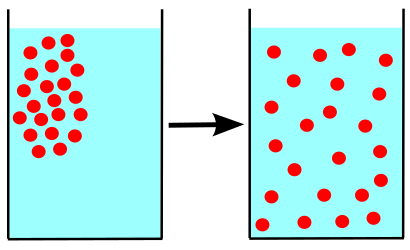
Facilitated Diffusion-
Facilitated diffusion is when a molecule cannot just passively diffuse across a membrane; however, it requires a protein "carrier" and energy in the form of ATP to move across the membrane.
e.g: Glucose, sodium ions and choride ions are just a few examples of molecules and ions that must efficently get across the plasma membrane but to which the lipid bilayer of the membrane is virtually impermeable. Their transport must therefore be "facilitated" by proteins that span the membrane and provide an alternative route or bypass.

Active transport is the movement of a substance against its concentration gradient (from low to high concentration). In all cells, this is usually concerned with accumulating high concentrations of molecules that the cell needs, such as ions, glucose, and amino acids. If the process uses chemical energy, such as from ATP.
e.g: Sugar molecules go into a cell. It cannot pass right through like water and oxygen so it uses active transport.

Osmosis-
Osmosis is the movement of solvent molecules through a selectively permeable membrane into a region of higher solute concentration, aiming to equalize the solute concentrations on the two sides.
e.g: Osmosis occurs on your hands in the bath. When you're in the shower too long, your hands and fingers become wrinkly.

Endocytosis-
Endocytosis is a process by which cells absorb molecules (such as proteins) by engulfing them. It is used by all cells of the body because most substances important to them are large polar molecules that cannot pass through the hydrophobic plasma or cell membrane. e.g: Leucocytes, neutrophils, and monocytes can engulf foreign substances like bacteria.

Friday, October 28, 2011
Comparison of 3 Different Types of Cells
Neuron Cell:

Animal Cell:

Plant Cell:

They are similar since they are eukaryotes. They also contain a nucleus with genetic information. However, some parts of them are different. Plant cells have chloroplasts while the others don't. Neurons have a synapse and axon to keep itself connected. Animal cells have centrioles for only animals and humans.

Animal Cell:

Plant Cell:
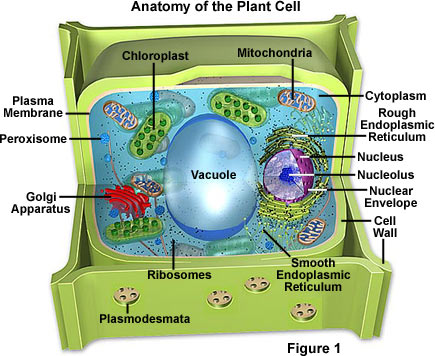
They are similar since they are eukaryotes. They also contain a nucleus with genetic information. However, some parts of them are different. Plant cells have chloroplasts while the others don't. Neurons have a synapse and axon to keep itself connected. Animal cells have centrioles for only animals and humans.
Scanning Light Microscope Vs. Scanning Electron Microscope
Bullet Ant
Compound Light Microscope:

Scanning Electron Microscope:

Pro: You can see the ant clearly. You can even see the small parts such as the eyes and its structure, the hairs, and its antennae, etc.
Con: The scanning microscope shows a more clearer image and it can zoom in more and show vivid details.
Cockroach:
Compound Light Microscope:

Scanning Electron Microscope:

Pro: You can see many minor and small details on both microscopes such as the hairs and structure.
Con: But with the compound light microscope you can see closer and have a more vivid detail on the image.
Fruit Fly
Compound Light Microscope:
Scanning Electron:

Pro:You can see the details on the fruit fly you can not see with your naked eye, you can see how the structure of the head and eyes.
Con:With the scanning electron you can see the fruit fly as well as the compound light, but you can still see details as of the whole head.
Honey Bee
Compound Light Microscope:

Scanning Electron Microscope:

Pro: Both microscopes you can see the honey bee’s antennas and the hairs on their faces.
Con: With the compound light microscope you can see a clearer and more vivid view of the bee’s body while with the scanning you can’t see as well.
Gecko's Feet
Compound Light Microscope:

Scanning Electron Microscope:

Pro: You can see the size of the fingers/ feet, and the structure of the fingers and how it looks.
Con: With the scanning electron you can see deeper and closer into the gecko’s feet while with compound light you can see the color and structure but not as close up as scanning.
Compound Light Microscope:

Scanning Electron Microscope:

Pro: You can see the ant clearly. You can even see the small parts such as the eyes and its structure, the hairs, and its antennae, etc.
Con: The scanning microscope shows a more clearer image and it can zoom in more and show vivid details.
Cockroach:
Compound Light Microscope:

Scanning Electron Microscope:

Pro: You can see many minor and small details on both microscopes such as the hairs and structure.
Con: But with the compound light microscope you can see closer and have a more vivid detail on the image.
Fruit Fly
Compound Light Microscope:

Scanning Electron:

Pro:You can see the details on the fruit fly you can not see with your naked eye, you can see how the structure of the head and eyes.
Con:With the scanning electron you can see the fruit fly as well as the compound light, but you can still see details as of the whole head.
Honey Bee
Compound Light Microscope:

Scanning Electron Microscope:

Pro: Both microscopes you can see the honey bee’s antennas and the hairs on their faces.
Con: With the compound light microscope you can see a clearer and more vivid view of the bee’s body while with the scanning you can’t see as well.
Gecko's Feet
Compound Light Microscope:

Scanning Electron Microscope:

Pro: You can see the size of the fingers/ feet, and the structure of the fingers and how it looks.
Con: With the scanning electron you can see deeper and closer into the gecko’s feet while with compound light you can see the color and structure but not as close up as scanning.
Saturday, October 15, 2011
5 Major Nutrients
1. Vitamins
 Vitamins are organic molecules that help regulate body processes often working with enzymes. They are able to to help the metabolic enzymes responsible for processing carbohydrates, fats and protein from food and putting the resulting compounds to work. Specific vitamins have different specific functions.
2. Minerals
 Minerals are inorganic compounds that the body needs in small amounts. Minerals are required to activate thousands of enzyme reactions within the body. Different minerals have different functions such as acid-base balance, bone and tooth formation, body water balance, etc.
3. Lipids
 Lipids, or fat, are formed from fatty acids and glycerol. Your body needs certain fatty acids to produce cell membranes, myelin sheaths, and certain hormones. They also help absorb fat-soluble vitamins. Extra fat is stored which protects body organs and insulate the body.
4. Carbohydrates
 Carbohydrates are the main source of energy for the body. The main function of carbohydrates is to provide energy for the body, especially the brain and the nervous system. Amylase, an enzyme, helps break down carbohydrates into glucose which is used for energy by the body.
5. Proteins

Proteins have a lot of roles in the body. They supply raw materials for growth and repair of structures such as skin and muscle. They have regulatory and transport functions. They are polymers of amino acids.

2. Minerals

3. Lipids

4. Carbohydrates

5. Proteins

Proteins have a lot of roles in the body. They supply raw materials for growth and repair of structures such as skin and muscle. They have regulatory and transport functions. They are polymers of amino acids.
Tuesday, October 4, 2011
scientific method wordle.

Objective- the goal that needs to be reached
Hypothesis- a logical guess about the natural world
Variable- a factor that changes in order to test a hypothesis
Control- a standard against which other conditions can be compared in a scientific experiment
Procedure- the steps and course of action that is taken to achieve a result
qualitative data- data that describes characteristics such as color, texture, etc
quantitative data- data that describes characteristics relating to numbers such as measures 5 inches
observation- act of observing and recording data
theory- a concept about the natural world that is supported by a lot of data
conclusion- result of experiment or research
possible errors- errors that may have been made during experiment
scientific method- a method of investigation involving observation and theory to test scientific hypotheses
Wednesday, September 28, 2011

Subscribe to:
Comments (Atom)