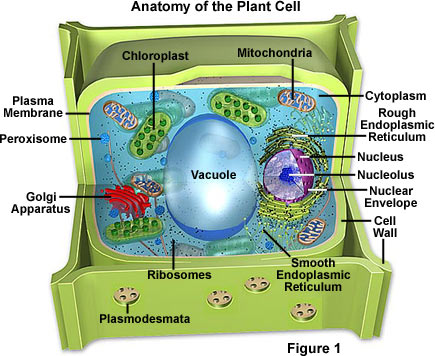
Neuron Cell:
Animal Cell:
Plant Cell:
They are similar since they are eukaryotes. They also contain a nucleus with genetic information. However, some parts of them are different. Plant cells have chloroplasts while the others don't. Neurons have a synapse and axon to keep itself connected. Animal cells have centrioles for only animals and humans.
Friday, October 28, 2011
Scanning Light Microscope Vs. Scanning Electron Microscope
Bullet Ant
Compound Light Microscope:
Scanning Electron Microscope:
Pro: You can see the ant clearly. You can even see the small parts such as the eyes and its structure, the hairs, and its antennae, etc.
Con: The scanning microscope shows a more clearer image and it can zoom in more and show vivid details.
Cockroach:
Compound Light Microscope:
Scanning Electron Microscope:
Pro: You can see many minor and small details on both microscopes such as the hairs and structure.
Con: But with the compound light microscope you can see closer and have a more vivid detail on the image.
Fruit Fly
Compound Light Microscope:
Scanning Electron:
Pro:You can see the details on the fruit fly you can not see with your naked eye, you can see how the structure of the head and eyes.
Con:With the scanning electron you can see the fruit fly as well as the compound light, but you can still see details as of the whole head.
Honey Bee
Compound Light Microscope:
Scanning Electron Microscope:
Pro: Both microscopes you can see the honey bee’s antennas and the hairs on their faces.
Con: With the compound light microscope you can see a clearer and more vivid view of the bee’s body while with the scanning you can’t see as well.
Gecko's Feet
Compound Light Microscope:
Scanning Electron Microscope:
Pro: You can see the size of the fingers/ feet, and the structure of the fingers and how it looks.
Con: With the scanning electron you can see deeper and closer into the gecko’s feet while with compound light you can see the color and structure but not as close up as scanning.
Compound Light Microscope:
Scanning Electron Microscope:
Pro: You can see the ant clearly. You can even see the small parts such as the eyes and its structure, the hairs, and its antennae, etc.
Con: The scanning microscope shows a more clearer image and it can zoom in more and show vivid details.
Cockroach:
Compound Light Microscope:
Scanning Electron Microscope:
Pro: You can see many minor and small details on both microscopes such as the hairs and structure.
Con: But with the compound light microscope you can see closer and have a more vivid detail on the image.
Fruit Fly
Compound Light Microscope:
Scanning Electron:
Pro:You can see the details on the fruit fly you can not see with your naked eye, you can see how the structure of the head and eyes.
Con:With the scanning electron you can see the fruit fly as well as the compound light, but you can still see details as of the whole head.
Honey Bee
Compound Light Microscope:
Scanning Electron Microscope:
Pro: Both microscopes you can see the honey bee’s antennas and the hairs on their faces.
Con: With the compound light microscope you can see a clearer and more vivid view of the bee’s body while with the scanning you can’t see as well.
Gecko's Feet
Compound Light Microscope:
Scanning Electron Microscope:
Pro: You can see the size of the fingers/ feet, and the structure of the fingers and how it looks.
Con: With the scanning electron you can see deeper and closer into the gecko’s feet while with compound light you can see the color and structure but not as close up as scanning.
Saturday, October 15, 2011
5 Major Nutrients
1. Vitamins
Vitamins are organic molecules that help regulate body processes often working with enzymes. They are able to to help the metabolic enzymes responsible for processing carbohydrates, fats and protein from food and putting the resulting compounds to work. Specific vitamins have different specific functions.
2. Minerals
Minerals are inorganic compounds that the body needs in small amounts. Minerals are required to activate thousands of enzyme reactions within the body. Different minerals have different functions such as acid-base balance, bone and tooth formation, body water balance, etc.
3. Lipids
Lipids, or fat, are formed from fatty acids and glycerol. Your body needs certain fatty acids to produce cell membranes, myelin sheaths, and certain hormones. They also help absorb fat-soluble vitamins. Extra fat is stored which protects body organs and insulate the body.
4. Carbohydrates
Carbohydrates are the main source of energy for the body. The main function of carbohydrates is to provide energy for the body, especially the brain and the nervous system. Amylase, an enzyme, helps break down carbohydrates into glucose which is used for energy by the body.
5. Proteins
Proteins have a lot of roles in the body. They supply raw materials for growth and repair of structures such as skin and muscle. They have regulatory and transport functions. They are polymers of amino acids.
Vitamins are organic molecules that help regulate body processes often working with enzymes. They are able to to help the metabolic enzymes responsible for processing carbohydrates, fats and protein from food and putting the resulting compounds to work. Specific vitamins have different specific functions.
2. Minerals
Minerals are inorganic compounds that the body needs in small amounts. Minerals are required to activate thousands of enzyme reactions within the body. Different minerals have different functions such as acid-base balance, bone and tooth formation, body water balance, etc.
3. Lipids
Lipids, or fat, are formed from fatty acids and glycerol. Your body needs certain fatty acids to produce cell membranes, myelin sheaths, and certain hormones. They also help absorb fat-soluble vitamins. Extra fat is stored which protects body organs and insulate the body.
4. Carbohydrates
Carbohydrates are the main source of energy for the body. The main function of carbohydrates is to provide energy for the body, especially the brain and the nervous system. Amylase, an enzyme, helps break down carbohydrates into glucose which is used for energy by the body.
5. Proteins
Proteins have a lot of roles in the body. They supply raw materials for growth and repair of structures such as skin and muscle. They have regulatory and transport functions. They are polymers of amino acids.
Tuesday, October 4, 2011
scientific method wordle.
Objective- the goal that needs to be reached
Hypothesis- a logical guess about the natural world
Variable- a factor that changes in order to test a hypothesis
Control- a standard against which other conditions can be compared in a scientific experiment
Procedure- the steps and course of action that is taken to achieve a result
qualitative data- data that describes characteristics such as color, texture, etc
quantitative data- data that describes characteristics relating to numbers such as measures 5 inches
observation- act of observing and recording data
theory- a concept about the natural world that is supported by a lot of data
conclusion- result of experiment or research
possible errors- errors that may have been made during experiment
scientific method- a method of investigation involving observation and theory to test scientific hypotheses
Subscribe to:
Comments (Atom)